
Naked Smoothies: Unveiling the Health Benefits and Nutritional Value
You grab a bottle of green juice on your way out the door, thinking you’ve nailed a healthy breakfast. But three hours later you’re hungry, sluggish, and wondering if that 15-ounce drink was worth the sugar. I’ve been there. Most people don’t realize that many store-bought smoothies — even the ones labeled ‘natural’ — can contain more sugar than a candy bar, with very little protein or fiber to keep you full.
This article clears up what you’re actually getting from Naked smoothies, specifically the Green Machine, and how they stack up against homemade alternatives. You’ll learn which numbers matter on the label, why ‘no sugar added’ doesn’t mean low sugar, and when a bottled smoothie is genuinely helpful versus when it’s just expensive juice. No hype, just facts.
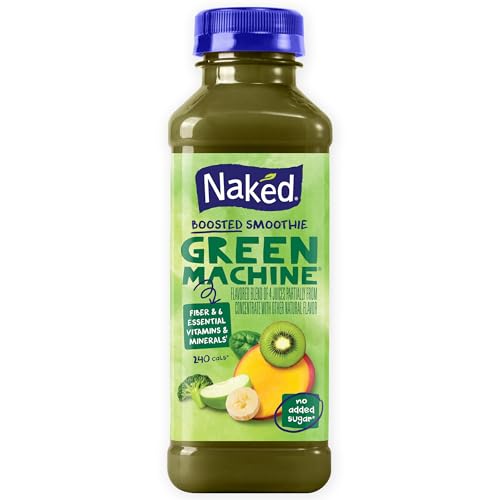
Naked
Naked Boosted Smoothie Green Machine, 15.2 fl oz Bottle - Real Fruit Juice Smoothie with Fiber, Excellent Source of Vitamin C and Vitamin E for Immune Support
- Naked Juice Green Machine is the iconic smoothie made with real fruit and veggies – partially from concentrate – including apple j…
- No sugar added* and an extra boost of broccoli, spinach, kale, parsley, ginger, wheat grass, barley grass, alfalfa, spirulina and…
- A flavorful and refreshing green smoothie that’s also plant-based and vegan, made with no preservatives and is non-GMO Project ver…
After the introduction, I’ll walk through the real differences between bottled and fresh smoothies, the specific ingredients in Naked’s Green Machine, a direct nutritional comparison table, and practical scenarios where this product makes sense. Then I’ll answer five common questions people search for.
If you want a fast, shelf-stable option that delivers real fruit and veggie servings without any artificial junk, the Naked Boosted Smoothie Green Machine, 15.2 fl oz Bottle is one of the few bottled smoothies I’d recommend checking out. It’s made from real fruit puree and veggie concentrates, has no added sugar, and provides vitamins A, C, and B6. The ingredient list includes broccoli, spinach, kale, wheat grass, and spirulina — things most people don’t eat enough of. It won’t replace a blended-from-scratch smoothie, but it fills a real gap when you need something portable and decently nutritious.
The Real Difference Between Store-Bought and Homemade Smoothies
Most people assume homemade is always better. That’s mostly true, but not for the reasons you think.
Homemade smoothies let you control every variable — you can toss in a handful of spinach, half a banana, some Greek yogurt, and a scoop of protein powder. That combo gives you fiber, protein, and healthy fats. A typical 16-ounce homemade green smoothie might have 8 grams of fiber and 12 grams of protein. You’ll stay full for four hours.
Now look at a typical bottled green smoothie. The Naked Green Machine has 2 grams of fiber per 15.2 ounces. That’s barely anything. It also has 4 grams of protein. That’s from the fruit and greens themselves, not from any intentional protein source. The main calorie source is fruit sugar — natural, yes, but still sugar. One bottle contains about 48 grams of total sugar. That’s equivalent to 12 teaspoons. It’s all from fruit, but your body processes fruit sugar the same way it processes added sugar when it comes to your liver and blood glucose.
The important nuance: ‘no sugar added’ doesn’t mean ‘low sugar.’ It means the sugar comes from concentrated fruit juice and puree. The fiber has been partially broken down during processing, so your body absorbs that sugar faster than it would from whole fruit. That’s the trade-off you need to understand.
If you have the time and equipment to make your own, you’ll get more fiber, more protein, and better blood sugar control. A good food processor and smoothie maker can handle both chopping and blending, making it easy to prep smoothie bags for the week. But if you’re running late and need something now, the Naked bottle is better than skipping breakfast or grabbing a pastry.
What’s Actually in That Green Bottle?
Another misconception: all green smoothies are basically the same — spinach, banana, apple juice. Naked’s Green Machine is different.
The ingredients list reads like a farmer’s market haul: apple juice concentrate, mango puree, pineapple juice, banana puree, kiwi puree, broccoli, spinach, kale, parsley, ginger, wheat grass, barley grass, alfalfa, spirulina, and garlic. That’s 13 different plants, many of which are dark leafy greens and algae. Spirulina and wheat grass are nutrient-dense but taste terrible on their own. Naked masks them with sweet fruit. That’s the trick — and it works.
Here’s what you actually get per bottle (15.2 fl oz):
- Calories: 280
- Sugar: 48g (all from fruit)
- Fiber: 2g
- Protein: 4g
- Vitamin C: 60% DV
- Vitamin A: 40% DV
- Vitamin B6: 50% DV
The vitamin numbers are impressive. One bottle delivers more than half your daily vitamin C and B6. That’s because the ingredients are partially from concentrate, which concentrates the nutrients alongside the sugars. It’s a dense source of micronutrients, but light on macronutrients that keep you full.
One more thing people miss: Naked uses a high-pressure processing method instead of pasteurization. That preserves more nutrients and keeps the fresh taste. It also means the bottle needs refrigeration after opening, even though it’s shelf-stable until then. Check the label — you’ll see it. It’s not a sterile juice box.
Nutritional Showdown: Bottled vs. Homemade Green Smoothie
To give you a clear picture, here’s a direct comparison of a single serving of three common options: Naked Green Machine, a homemade green smoothie you’d make at home, and a typical green juice (no pulp).
| Nutrient (per ~15 oz) | Naked Green Machine | Homemade Green Smoothie (spinach, banana, yogurt, chia) | Green Juice (kale, apple, celery, no fiber) |
|---|---|---|---|
| Calories | 280 | 320 | 150 |
| Total Sugar | 48g | 35g (3g added if honey) | 30g |
| Fiber | 2g | 10g | 0g |
| Protein | 4g | 14g | 2g |
| Vitamin C (%DV) | 60% | 40% | 30% |
| Vitamin A (%DV) | 40% | 50% | 60% |
| Satiety (hours full) | 1–2 | 3–4 | <1 |
The homemade version wins on fiber, protein, and staying power. But it takes 5 minutes to blend plus cleanup. The juice gives you vitamins fast but zero fiber and a blood sugar spike. Naked sits in the middle — decent vitamins, minimal fiber, moderate sugar. It’s not a meal replacement, but it works as a quick vitamin boost if you eat something solid alongside it.
If you prefer a thicker, more filling smoothie you can make at home, the Ninja Foodi Smoothie Bowl Maker and Nutrient Extractor is designed for heavy-duty blending with frozen fruit and greens. That machine will give you more control over texture and nutrient density than any bottle can.
When a Bottled Smoothie Makes Sense
After looking at the numbers, you might think bottled smoothies are a rip-off. Not always. Here’s where Naked Green Machine genuinely helps.
First, travel. You can’t bring a blender on a plane or to a hotel room. I’ve thrown a bottle in my carry-on for early flights. It counts as a liquid under 3.4 ounces? No, 15.2 oz is above the TSA limit for carry-ons. So pack it in checked luggage or buy it after security. Once there, it’s a decent option when hotel breakfast is all pastries and sugary cereal.
Second, medical situations. Some people have difficulty chewing or swallowing whole fruits and vegetables after surgeries or dental work. A smoothie like this provides vitamins without requiring chewing. The consistency is thin enough to drink through a straw. It’s not ideal long-term, but short-term recovery use is smart.
Third, the ‘I haven’t eaten a vegetable in two days’ emergency. Let’s be honest — some days you’re so busy you survive on coffee and granola bars. One bottle of Green Machine delivers more phytonutrients than most people get in a week. It’s not a crutch, but it’s a stopgap. The antioxidants from spirulina, wheat grass, and kale are real. Your gut bacteria will thank you for the diversity of plant compounds.
Fourth, kids who refuse to eat greens. A surprising number of parents report their children happily drink Naked Green Machine because the fruit sweetness overpowers the vegetable taste. That’s a win if the alternative is nothing green at all. Just keep portions reasonable — half a bottle for a child under 8, because of the sugar content.
And if you want to make your own green juice at home with more control over sugar, a best juicer and smoothie maker combo machine lets you switch between juicing fibrous greens and blending thick smoothies. That gives you the flexibility to make exactly what you need.
Frequently Asked Questions
Is Naked Green Machine actually healthy or is it full of sugar?
It’s both. Healthy in the sense that it delivers a wide spectrum of vitamins and plant compounds from real fruits and vegetables, without artificial additives. But the sugar content — 48 grams per bottle — is high, even though it’s all from fruit. For comparison, the American Heart Association recommends no more than 36 grams of added sugar per day for men, 25 for women. Naked’s sugar is technically not added, but your body still has to process it. If you’re diabetic or prediabetic, drink half a bottle and pair it with protein. If you’re generally healthy, it’s fine as an occasional vitamin boost, not a daily beverage.
Can I use Naked smoothies as a meal replacement for weight loss?
Not really. With only 4 grams of protein and 2 grams of fiber, you’ll be hungry within two hours. For weight loss, you need satiety — protein and fiber keep you from snacking later. A 280-calorie drink that leaves you ravenous is counterproductive. Use it as a small snack or a vitamin supplement alongside a real meal, not instead of one. If you want a meal replacement, add a scoop of protein powder to a homemade smoothie.
Are the vegetables in Naked Green Machine really fresh or processed from powder?
They’re processed from puree and juice concentrates, not fresh whole vegetables. The ingredients list ‘broccoli,’ ‘spinach,’ ‘kale’ — those are purees. The grass and algae (wheat grass, barley grass, spirulina) are likely powder or liquid extracts. That’s fine; you still get the vitamins. But the fiber structure is broken down compared to chewing raw spinach. Don’t expect the same fiber content you’d get from eating a salad. The processing method (high pressure) preserves more nutrients than heat pasteurization, so the vitamin content is quite good.
How does Naked Green Machine compare to other green drinks like Suja or Bolthouse Farms?
Suja and Bolthouse both make similar products, but the differences matter. Suja often uses cold-pressed juice (less oxidation, more delicate nutrients). Bolthouse tends to add more fruit and less greens, so the sugar can be even higher. Naked uses high-pressure processing and no preservatives. The taste of Naked Green Machine is sweeter than Suja’s green blends because Naked leads with apple and pineapple. Suja’s ‘Greens’ is more savory. Bolthouse’s ‘Green Goodness’ is mostly apple juice with spirulina — check the label, it’s less diverse. Naked has the widest variety of plants of the three. But all three share the same basic trade-off: convenient vitamins, low fiber, high natural sugar. Pick the one that tastes best to you.
Does Naked Green Machine need to be refrigerated before opening?
No. The packaging says ‘Shelf Stable Until Opened.’ It can sit in your pantry at room temperature. After you open it, you must refrigerate and drink within 3 days. The high-pressure processing kills pathogens without heat, so it stays stable unopened for months. Check the ‘best by’ date on the bottle. Once opened, treat it like fresh juice — it will ferment if left out. I’ve left a half-finished bottle in my bag for a day and regretted it. Trust the label.
What to Remember About Bottled Smoothies
- Naked Green Machine delivers real fruit and vegetable nutrients without artificial junk, but it’s not a meal replacement due to low fiber and protein.
- The ‘no sugar added’ label is truthful, but 48 grams of fruit sugar per bottle is still a lot. Drink half if sugar is a concern.
- Pair it with something solid — a handful of almonds, a hard-boiled egg — to avoid the blood sugar crash that comes from liquid sugar alone.
- It beats skipping vegetables entirely. For someone who rarely eats greens, one bottle provides more plant diversity than most fast-food diets.
- Homemade smoothies win on fiber, protein, and satiety every time. Buy the Naked bottle for convenience, not nutrition superiority.
- Check the ingredients list on any bottled smoothie — if the first ingredient is apple juice or apple juice concentrate, you’re basically drinking apple juice with green powder. Naked’s first ingredient is apple juice concentrate, but the rest of the list is genuinely diverse.
- If you drink these regularly, consider rotating with a homemade option using a blender that handles greens well. Your wallet and your fiber intake will thank you.