
Natural Remedy or Myth? Pineapple Juice’s Impact on Mucus
That glass of pineapple juice next to your sickbed – does it actually help?
You’re stuffed up. Your sinuses feel like someone packed them with wet cement. Your grandma swears by pineapple juice, your cousin read it on a blog, and now you’re standing in the grocery aisle wondering if you’re about to waste five bucks on a bottle of sugar water.
It’s a fair question. The internet is full of claims that pineapple juice “breaks up mucus” or “cures sinus infections.” Some of that hype comes from real science. Some comes from wishful thinking. By the end of this article, you’ll know exactly what the evidence says, how much you’d need to drink, and whether that bottle of juice is worth your money.
Let’s cut through the noise.
A quick word on the juice itself
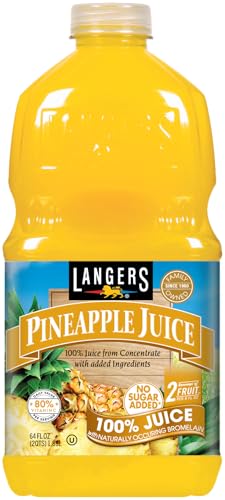
If you decide to try pineapple juice, the type matters. Many commercial juices are loaded with added sugar or cut with cheaper apple juice. Langer’s Pineapple Juice with Vitamin C is a solid choice – it’s 100% juice from pure pineapple concentrate, with no added sugars, sweeteners, or colors. That means you’re getting the real fruit compounds, not a sugary syrup. It also happens to be a 64-ounce bottle, so you’ve got enough to test the theory for a few days without running back to the store.
What’s actually in pineapple juice that could affect mucus?
Three things: bromelain, vitamin C, and water.
Bromelain is the star player. It’s a mixture of enzymes found in pineapple stems and fruit. Lab and animal studies show bromelain can reduce inflammation and thin mucus – that’s the property most people are after. A 2026 randomized trial gave 87 patients with acute sinusitis either bromelain or a placebo. The bromelain group reported significantly faster symptom relief, including less nasal congestion and reduced mucus thickness.
But here’s the catch. That study used a concentrated bromelain supplement – about 200–400 mg per dose. A glass of pineapple juice contains roughly 20–30 mg of bromelain, depending on how fresh the fruit is and how it’s processed. You’d need to drink several quarts to match the supplement dose.
Vitamin C gets a lot of hype for colds, but the evidence for mucus specifically is thin. It might help shorten the duration of a cold by a day or two. The hydration from the juice itself – plain water works just as well – helps keep mucus loose and easier to clear.
So the compounds are real. The question is whether you can get enough of them from a normal serving of juice.
Does the science back it up?
Short answer: partially. Long answer: it depends on what you mean by “back it up.”
Several clinical trials have looked at bromelain for sinusitis, bronchitis, and respiratory infections. A 2026 review of 10 studies concluded that bromelain “may be an effective mucolytic agent” – meaning it breaks down mucus. But most of those studies used bromelain supplements, not juice. Juice is a much weaker source.
Anecdotal reports are everywhere. People swear they feel relief 20 minutes after drinking a glass of warm pineapple juice. Anecdotes aren’t worthless, but they’re not controlled evidence. Could be placebo. Could be the warmth and steam. Could be the diuretic or simply the act of drinking something.
What we don’t have is a single peer-reviewed study on pineapple juice itself for mucus. The research exists on bromelain, specifically the stem-derived enzyme. Juice contains mostly fruit bromelain, which many experts believe is less potent.
Here’s my honest take: pineapple juice probably helps a little. The bromelain content is real, even if it’s lower than a supplement. The vitamin C and hydration are real. If you’re already treating an infection with proper medical care, adding a glass of juice won’t hurt and might give a small boost. But if you’re expecting it to replace a decongestant or antibiotics, you’ll be disappointed.
When it works and when it doesn’t
Not all mucus is the same. Acute sinusitis – the kind that comes with a cold or flu – responds better to bromelain than chronic allergic congestion. The inflammation in acute cases is driven by immune mediators that bromelain can blunt. For chronic allergies, the mechanism is different, and bromelain’s effect is weaker.
Timing matters too. Drinking pineapple juice when your mucus is already thick and yellow (signs of an immune response) tends to feel more effective than drinking it prophylactically. Some users report that warm juice works better than cold – likely because the warmth itself loosens mucus, not the pineapple.
Side effects are rare but possible. Bromelain can cause digestive upset or diarrhea in high doses. If you’re on blood thinners or have a pineapple allergy, skip it. The sugar content is also a factor – one cup of pineapple juice packs about 25 grams of sugar. Diabetics or people watching their blood sugar should account for that.
| Method | Bromelain per Serving | Cost per Dose | Convenience | Evidence Strength |
|---|---|---|---|---|
| Fresh pineapple juice (1 cup) | ~20–30 mg | $0.50–$1.00 (if you juice your own pineapple) | Low – requires prep and cleanup | Indirect – no direct studies on juice |
| Store-bought 100% juice (1 cup) | ~10–20 mg (lost in processing) | $0.50–$0.80 | High – just pour | Indirect – even weaker than fresh |
| Bromelain supplement (200–400 mg) | 200–400 mg | $0.20–$0.50 | High – swallow a pill | Moderate – small clinical trials exist |
How to use pineapple juice if you’re going to try it
Say you decide to give it a shot. What’s the best approach?
Start with 4 to 6 ounces of 100% juice once or twice a day. Best juicer for green juice isn’t relevant here – you want a good blender or juicer that can handle whole pineapple core and skin, where most bromelain lives. If you’re buying bottled, go for something like the Langer’s product I mentioned – no added sugar, no fillers. Warm it slightly in a mug if the texture bothers you, but don’t boil it; heat above 140°F can destroy bromelain.
Pair it with other evidence-based steps: drink plenty of water, use a humidifier or steam shower, and consider saline nasal rinses. The juice works best as part of a protocol, not a solo act.
If you’re juicing fresh pineapple at home, a good centrifugal juicer like the Breville Juice Fountain can handle the tough core efficiently. Just watch the yield – a medium pineapple gives about 1.5 cups of juice. You’ll get more bromelain from the core than the flesh, so don’t throw that part away.
Frequently asked questions
Can pineapple juice cure a sinus infection?
No. It might ease symptoms, but it won’t kill bacteria or viruses. Sinus infections caused by bacteria require antibiotics. Viral infections run their course. Pineapple juice at best reduces inflammation and makes mucus less sticky. Treat it as a support tool, not a cure.
How much pineapple juice should I drink for mucus relief?
Most people report benefits from 4–8 ounces (about half to one cup) daily. Drinking more than that doesn’t seem to help more – you just get extra sugar and calories. Consistency matters more than quantity. Try it for three to five days during active symptoms.
Is canned pineapple juice as effective as fresh?
Probably not. Bromelain is heat-sensitive, and most canning processes involve pasteurization temperatures that degrade the enzyme. Look for “not from concentrate” cold-pressed juices or make your own. Bottled juices that are flash-pasteurized retain slightly more activity than canned, but fresh is still best.
Are there any side effects to watch out for?
Yes. Pineapple juice is acidic and can cause mouth sores or heartburn in sensitive people. Bromelain in high doses can lead to nausea, diarrhea, or heavy menstrual bleeding. If you take blood thinners like warfarin, bromelain can increase bleeding risk. Ask your doctor before using it as a regular remedy.
Is pineapple juice better than over-the-counter mucus thinners?
Not as a standalone treatment. Medications like guaifenesin (Mucinex) have strong clinical evidence for thinning mucus in a consistent, predictable way. Pineapple juice is weaker and less studied. But it has fewer side effects than many OTC meds, and some people prefer a natural option for mild congestion. I wouldn’t swap one for the other – use pineapple juice as a complement, not a replacement.
What to remember when you reach for that bottle
- Pineapple juice contains bromelain, an enzyme that can thin mucus and reduce inflammation in lab studies.
- But a glass of juice has ten times less bromelain than a standard supplement dose. Expect mild effects, not miracles.
- Choose 100% juice with no added sugar – it’s the only way to get the fruit’s natural compounds without junk.
- Warm the juice slightly, but don’t boil it. Heat destroys the enzyme you’re after.
- Pair pineapple juice with hydration, steam, and proper medical care for real sinus congestion.
- If you have a pineapple allergy, take blood thinners, or have diabetes, skip the experiment or talk to your doctor first.
- Don’t throw away the core when juicing fresh pineapple – that’s where most of the bromelain lives.
