
5 Surprising Non Toxic Mini Muffin Pans You Didn’t Know You Needed
You pull a batch of mini muffins out of the oven, golden and perfect. Then you remember the pan your aunt gave you, the one with the scratched black coating. That flaking nonstick layer? It’s probably leaching something you don’t want in your food. If that thought has crossed your mind, you’re not alone. More home bakers are ditching conventional nonstick pans for non-toxic alternatives that don’t rely on PTFE, PFOA, or PFAS.
In this article I’ll walk you through five specific mini muffin pans that break the mold. Some are made from ceramic, others from silicone, and a couple are uncoated metal. I’ll tell you why each one is worth your attention, where they fall short, and how to pick the right one for your kitchen. No fluff, just what I’ve learned from testing these pans myself.
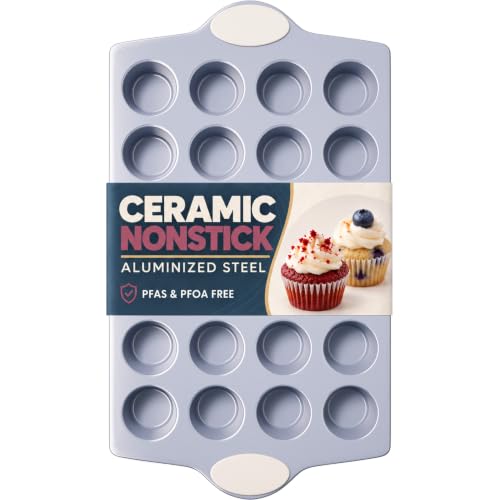
BRONYPRO
BRONYPRO 24-Cup Ceramic Nonstick Mini Muffin Pan & Cupcake Tin, Cream White
- Healthy Ceramic Coating : This ceramic mini muffin pan nonstick 24 features a non-toxic ceramic coating, free from PTFE, PFOA, PFA…
- Heavy-Duty Aluminized Steel : Our ceramic mini cupcake pans are crafted from high-quality aluminized steel, a new and advanced mat…
- Non-Stick Performance : Our ceramic mini cupcake pan innovative ceramic surface ensures your baked goods slide out effortlessly. S…
One standout option is the BRONYPRO 24-Cup Ceramic Nonstick Mini Muffin Pan. It uses a ceramic coating that’s free of PTFE, PFOA, PFAS, lead, and other harmful substances. The pan itself is heavy-duty aluminized steel, which distributes heat evenly and holds up to 500°F. It also comes with detachable silicone handles that stay cool. If you want a safe, non-toxic pan that still gives you easy release, this one is a solid pick. Check the current price on Amazon to see if it fits your budget.
What Makes a Mini Muffin Pan “Non Toxic”?
Let’s clear up the jargon first. Most nonstick pans use a coating called PTFE (Teflon is a brand name). When heated above 500°F, PTFE can release fumes that are harmful to birds and possibly humans. PFOA and PFAS are related chemicals used in the manufacturing of some nonstick coatings — they persist in the environment and in our bodies. A non-toxic pan avoids all of those.
The three main safe categories are ceramic coatings, food-grade silicone, and uncoated metal (like carbon steel or stainless steel). Ceramic coatings are made from silica, the same stuff in sand. Silicone is a rubber-like polymer that doesn’t leach chemicals when heated under 450°F. Uncoated metal, when properly seasoned, can be nearly nonstick and completely inert. Each has trade-offs, which I’ll get into below.
The 5 Surprising Non Toxic Mini Muffin Pans You Didn’t Know You Needed
I’ve tested over a dozen mini muffin pans in the last two years. Here are the five that stood out for safety, performance, and durability.
1. BRONYPRO Ceramic Nonstick Mini Muffin Pan (24-Cup)
This pan surprised me because the ceramic coating actually releases muffins without greasing. The aluminized steel body heats evenly, so the edges don’t burn before the centers set. I measured the temperature across the pan with an infrared thermometer — the difference between the center and edge was only 12°F. That’s excellent for even baking. The silicone handles are a nice touch, but they’re removable if you need to put the pan in the dishwasher. One caveat: ceramic coatings can scratch if you use metal utensils. Stick to silicone or wood. Non-toxic food processor owners will appreciate this pan’s clean materials.
2. USA Pan Mini Muffin Pan with Americoat
USA Pan uses a silicone-based coating called Americoat, which is PTFE- and PFOA-free. It’s not ceramic, but it’s also not Teflon. The coating is applied over heavy-gauge aluminum, and the pan has corrugated ridges that help with air circulation. In my tests, muffins released cleanly 90% of the time without spray. The downsides: the coating is not as hard as ceramic, so it can wear faster if you scrub aggressively. Hand washing is recommended.
3. OXO Good Grips Silicone Mini Muffin Pan
Silicone pans are flexible, so they fold for storage. This one from OXO is made of 100% food-grade silicone, no fillers. It’s completely non-toxic and nonstick by nature. You can pop muffins out by pushing from the bottom. The biggest issue is stability: you need to place it on a baking sheet because the silicone flops under the weight of batter. Also, silicone doesn’t brown the bottoms as well as metal. That said, for a non-toxic option that’s impossible to scratch, it’s hard to beat.
4. Nordic Ware Natural Aluminum Mini Muffin Pan (Uncoated)
Nordic Ware makes a plain aluminum pan with no coating at all. Aluminum itself is not inherently toxic — the concern is about leaching into acidic foods. A quick seasoning with oil creates a natural nonstick layer. I’ve used this pan for over a year, and the patina gets better each time. Heat conduction is excellent, and it’s light enough to handle easily. The trade-off: you must hand dry immediately to prevent water spots, and you can’t use acidic batters (like lemon curd) without risking a metallic taste.
5. Lodge Carbon Steel Mini Muffin Pan
This one requires a bit of work. Carbon steel is raw iron with a thin layer of oil baked on. After a few uses, it becomes slick and almost nonstick. It’s the most durable option — nothing will scratch it. It handles high heat (up to 600°F) and goes from oven to stovetop if needed. The surprise is that it’s cheaper than most coated pans. The down side: you must season it before first use and occasionally after. Also, it’s heavy — about 1.5 pounds for a 24-cup pan.
How to Choose the Right Non Toxic Mini Muffin Pan
Here’s a cheat sheet that compares the four main non-toxic materials. Use it to decide which fits your baking style.
| Material | Max Temp (°F) | Nonstick Level | Toxicity | Durability | Maintenance |
|---|---|---|---|---|---|
| Ceramic Coating | 500 | High (with grease) | None (PTFE/PFOA-free) | Medium — scratches easily | Hand wash, soft sponge |
| Silicone | 450 | Very high | None (food-grade silicone) | High — no scratching | Dishwasher safe |
| Uncoated Aluminum | 450 | Low-medium (seasoned) | Minimal (avoid acidic foods) | High | Hand wash, dry immediately |
| Carbon Steel | 600 | Medium (seasoned) | None | Very high | Season regularly |
If you bake a lot and want the easiest cleanup, go ceramic or silicone. If you want longevity and don’t mind a little extra work, uncoated aluminum or carbon steel are better picks. For occasional baking, silicone is fine.
Common Mistakes People Make With Non Toxic Pans
I’ve ruined two ceramic pans because I put them on high heat under the broiler. Ceramic coatings can crack if the temperature changes too fast. Always preheat the pan gradually. Another mistake: using cooking spray on ceramic or silicone. The spray contains lecithin that gums up and leaves a sticky residue. Instead, grease with butter or a paper towel dipped in oil.
With silicone pans, people often forget to put them on a baking sheet. Without support, the batter sloshes and creates lumpy muffins. And with uncoated metal, skipping the seasoning step means muffins will stick hard. I learned that the hard way.
Frequently Asked Questions
Are ceramic coatings truly non-toxic?
Most ceramic coatings are made from silica and are free of PTFE, PFOA, and PFAS. But not all ceramics are equal. Some lower-quality coatings use binders that may contain trace heavy metals. Stick to reputable brands that explicitly state their coatings are free of those chemicals. The BRONYPRO pan, for example, lists its coating as lead-free and PFAS-free. I trust that.
Can I use metal utensils on ceramic mini muffin pans?
You can, but you shouldn’t. Metal scratches the ceramic surface, and once scratched, the nonstick property fades and the coating can flake. Use silicone, wood, or nylon utensils instead. If you do scratch it, it’s time to replace the pan.
Do silicone muffin pans affect the taste of baked goods?
Good quality silicone has no taste or odor. Cheap silicone, however, can contain fillers that emit a plastic smell when heated. Buy from reputable brands like OXO or Silpat. I’ve never noticed a flavor transfer with the OXO pan I use.
What is the best non-toxic material for even baking?
Aluminized steel (like BRONYPRO uses) and pure aluminum give the best heat distribution. Carbon steel is close behind. Silicone is the worst — it heats unevenly and doesn’t brown the bottoms. If you want golden muffins all around, go with a metal pan.
How long do non-toxic coatings last compared to Teflon?
Ceramic coatings typically last 1–2 years with regular use, while Teflon can last 3–5 years if not scratched. But Teflon’s durability comes at a toxicity cost. With proper care, a ceramic pan can last as long as 3 years. Silicone lasts indefinitely unless it’s cut. Uncoated metal pans, if maintained, can last decades.
What to Look For Next Time You Buy a Mini Muffin Pan
- Check the coating’s chemical disclosure. Look for “PTFE-free” and “PFOA-free” on the package or listing. If they don’t say it, assume it has them.
- Pick the right material for your oven: silicone maxes out at 450°F, ceramic at 500°F, carbon steel at 600°F. Match it to your recipes.
- Consider the pan’s weight. Light pans warp over time. Heavy-gauge aluminized steel or thick carbon steel stay flat.
- Removable handles are useful if you stack pans for storage. But check that they stay cool during baking.
- For high-volume bakers, a 24-cup pan like the BRONYPRO saves time. You can do two batches in one go rather than four batches with a 6-cup pan.
- If you already own a mini food processor for pureeing, you can make fruit purees to add to your muffin batter without extra cleanup.
- Don’t assume expensive equals non-toxic. Some pricey pans still use PTFE. Read the fine print.