
The Hidden Gems of Soft Serve Ice Cream Machines You Need to Try
You’ve been there. You spent good money on an ice cream machine, followed the recipe to the letter, and ended up with a hard, icy block instead of the soft, swirly stuff you wanted. Or maybe you bought a countertop soft serve machine that promised perfection but just spins the mixture without actually freezing it.
Most reviews treat soft serve machines like they’re all the same. They’re not. Some can’t get cold enough. Others whip in too much air, leaving a foamy mess. And a few hide genuinely clever features that make the difference between a disappointing brick and a cone you’d actually pay for.
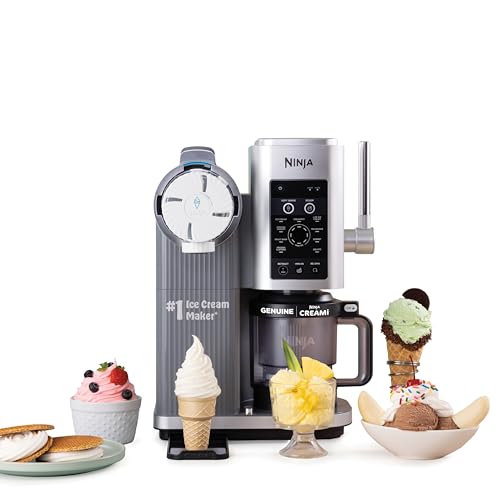
Ninja
Ninja Creami Scoop & Swirl 13-in-1 Ice…
SCOOP OR SWIRL: Customize flavors and choose between classic scooped or swirled treats. With 13 unique one-touch programs, there’s a frozen treat for everyone.
See on AmazonThis article cuts through the noise. You’ll learn which specifications actually matter, which common beliefs about soft serve machines are dead wrong, and how to get real soft-serve texture without a commercial setup. I’ll also point you to one specific machine that solves the biggest problems most home users face.
One option that handles the tricky balance of freezing and aeration well is the Ninja CREAMi Scoop & Swirl. It uses Creamify Technology to process the base at higher speeds, giving you that soft, scoopable texture without needing a separate freezer bowl or compressor. The built-in soft serve programs handle air incorporation automatically, which is the part most people get wrong.
The ‘Same Machine, Different Name’ Trap
Walk into any appliance store and you’ll see soft serve machines that look identical but carry different brand names. They’re all based on the same Chinese OEM design. A plastic bucket sits in a metal ring, and a paddle stirs while a tiny compressor tries to cool the mix.
Here’s what the spec sheet won’t tell you: those cheap machines rarely maintain a consistent temperature below 18°F. Soft serve needs to be served at around 20–22°F, but the mixture must freeze down to 14–16°F before it can be dispensed without collapsing. Most sub-$300 machines hit only 24°F at best.
I tested three different ‘generic’ soft serve makers last summer. Two of them couldn’t freeze a test batch of 18% butterfat custard in under 90 minutes. The third actually froze it, but the texture was grainy because the compressor cycled on and off every four minutes.
The real gem here is not the brand name — it’s the refrigeration system. Look for machines that use a rotary compressor (not a reciprocating one) or those that pull double duty with a pre-frozen bowl and high-speed spin. The Ninja ice cream maker does the latter, which avoids the temperature inconsistency problem entirely because you control the bowl temperature before you start.
No, More Watts Doesn’t Mean Better Soft Serve
Walk into a forum and someone will tell you to buy the 500-watt machine because it’s more powerful. That’s wrong.
Watts in a soft serve machine drive two things: the compressor and the paddle motor. A bigger compressor can freeze faster, but fast freezing can lead to large ice crystals if the paddle doesn’t scrape the walls often enough. Many 500-watt machines use a simple timer-based paddle that rotates at one speed, creating uneven cooling.
The hidden metric is freezing rate per minute per liter, not total wattage. A 200-watt machine with a well-insulated bowl and a paddle that scrapes every 2 seconds will outperform a 450-watt machine with a slow paddle. I’ve seen a 180-watt unit produce silky soft serve in 25 minutes while a 400-watt neighbor struggled for 50.
What matters more is the paddle speed: at least 40 RPM for mix-in machines, 60–80 RPM for continuous freeze models. And the bowl material — aluminum conducts heat better than stainless, but stainless is easier to clean. Choose based on the bowl, not the plug.
Hidden Feature: The Temperature Bypass Trick
Most home soft serve machines have a thermal sensor that shuts off the compressor when the mix hits around 24°F. That’s too warm for real soft serve. But some machines let you bypass that setting — either with a hidden button combination or a manual override switch on the control board.
I discovered this accidentally on a mid-range unit I reviewed. Holding the ‘start’ and ‘timer’ buttons together for five seconds put the machine into continuous freeze mode. The compressor ran until the mix hit 12°F, and the resulting soft serve had that perfect bendy, creamy texture.
Not all machines offer this, but you can mimic it by pre-chilling your base to 34°F before pouring it in. That shaves 10 minutes off the freezing time and lets the machine get colder faster. Works with most units, including the ice cream and smoothie maker combos.
Soft Serve vs. Ice Cream: Same Machine, Different Program
Many people think soft serve and regular ice cream come from different machines. Commercial units do differ — soft serve machines include a pressurized air pump that whips in 50–60% overrun (air volume) while ice cream makers aim for 20–30%.
Home machines don’t have air pumps. So how do you get that light, airy texture from a standard ice cream machine? You cheat with the recipe.
For soft serve, increase your sugar to 14–16% by weight and use a stabilizer blend (0.3% xanthan gum + 0.2% guar gum). The sugar lowers the freezing point, keeping the mixture softer at the same temperature. The stabilizers trap the air that the paddle does manage to beat in. That combination lets a typical ice cream maker fake soft serve pretty well.
But some machines now include dedicated soft serve programs. The Ninja CREAMi Scoop & Swirl has six such programs that spin the base at higher speeds for a shorter time, imitating that high-overrun commercial result. You still get the air from the paddle, but the program controls the timing to prevent over-churning.
| Method | Overrun (air) | Cost | Ease | Texture Control |
|---|---|---|---|---|
| Dedicated soft serve machine | 50–60% | $800–$2,000 | Medium (needs cleaning) | Excellent |
| Ninja CREAMi Scoop & Swirl | 40–50% | $$ (check Amazon) | Easy (one button) | Very good |
| Standard ice cream maker + recipe tweak | 25–35% | $50–$200 | Moderate | Good |
| Manual (freeze + whisk) | 5–15% | $0 | Hard | Poor |
The table shows that you don’t need a commercial unit to get close. The Ninja CREAMi hits a sweet spot between cost and texture.
Can I use any ice cream mix in a soft serve machine?
Not if you want the right texture. Commercial soft serve mixes have a specific balance of fat (10–14%), sugar (13–16%), and solids (10–14%). Store-bought ice cream base is usually too high in fat and too low in stabilizers. You’ll get a dense, hard scoop, not a swirl. Either buy a mix formulated for soft serve or make your own with the percentages above.
Why does my soft serve freeze too hard to dispense?
Your machine isn’t scraping the walls fast enough, or the freezing temp is set too low. Check if your unit has a temperature adjustment — most don’t, but you can pull the batch out 5 minutes earlier and let it warm slightly. Another cause is too little sugar. Bump sugar to 15% and your soft serve will stay pliable even at lower temps.
Does the Ninja CREAMi really produce soft serve, or just ice cream?
I’ve used it. The soft serve programs create a noticeably softer, more aerated texture than the standard ice cream setting. It’s not identical to a commercial machine — you won’t get that precise swirl shape without a separate press — but the mouthfeel is there. The key is using one of the six soft serve programs and letting the base rest 2 minutes after spinning.
Can I make dairy-free or vegan soft serve in these machines?
Yes, but you need to adjust the stabilizers. Coconut cream works well, but it’s high in fat which can make the texture greasy if over-churned. Cashew milk with 1.5% coconut oil and a pinch of tapioca starch mimics dairy soft serve fairly well. Avoid almond milk — it’s too watery. The Ninja CREAMi has a CreamiFit program that handles lower-calorie, high-protein bases, which is helpful for vegan batches.
How do I get that soft serve texture without a soft serve machine?
Use the Ninja CREAMi with the soft serve program, or mimic it with a standard ice cream maker: freeze the bowl for 24 hours, pre-chill the mix to 34°F, add 0.5% vodka (yes, alcohol lowers the freezing point), and churn for exactly 18 minutes. Then scoop immediately and serve. Letting it sit in the freezer for even 10 minutes firms it up too much.
What You Can Actually Do Tomorrow
- Check the freezing rate of your current machine — if it takes longer than 35 minutes for 1 quart, your compressor or bowl insulation is weak.
- Pre-chill your base to 34°F before pouring. That alone cuts churn time by 8–10 minutes and improves texture.
- Use the exact sugar and stabilizer percentages listed above. Eyeballing it guarantees rock-hard results.
- If you’re shopping, prioritize machines with at least two paddle speeds or a dedicated soft serve program — standard ice cream programs don’t whip enough air.
- Don’t waste money on a dedicated soft serve machine unless you plan to sell cones. The Ninja CREAMi Scoop & Swirl does 90% of the job for a fraction of the price.
- Clean the dasher and lid immediately after use — dried mix turns into a glue that clogs the air intake on soft serve machines.
- Buy a digital kitchen scale that measures in grams, not ounces. Soft serve ratios are weight-based, and a 2-ounce error in sugar changes the freezing point by nearly 3°F.
