
Top 5 Hand Crank Apple Peelers That Will Change Your Kitchen Game
You’ve stood over a sink peeling apples for thirty minutes, sharpening the peeler every five apples. Your hand aches. The peel keeps breaking. And you still have a bushel to go. That’s where a good hand crank apple peeler changes everything. One smooth turn and the apple is peeled, cored, and sliced in under five seconds. No electricity, no batteries, no mess. You just turn the crank.
This article walks you through five hand crank apple peelers that actually deliver on that promise. I’ll explain what makes each one worth your counter space, what to watch out for, and how to pick the right model for how you cook. You’ll learn why material and base type matter more than brand hype, and you’ll see a direct comparison so you can decide fast.
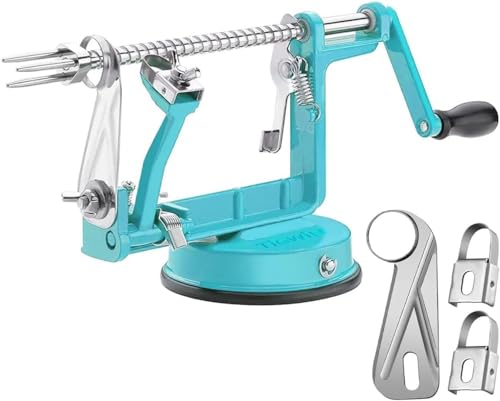
tigwin
Apple Peeler Corer, Long lasting Chrome Cast Magnesium Alloy Apple Peeler Slicer Corer with Stainless Steel Blades and Powerful Suction Base for Apples and Potato(Blue)
- Capable of paring, coring and slicing; paring only; or slicing and coring only
- Coring/slicing blade can be removed for potatoes
- Suction cup adheres to counter top with a strong hold
One model that handles this job well is the tigwin Apple Peeler Corer. It uses a chrome cast magnesium alloy body with stainless steel blades and a powerful suction base. You can peel, core, and slice in one pass, or remove the coring/slicing blade to prep potatoes. It comes with a lifetime warranty and responsive customer support.
Why crank by hand when electric peelers exist?
Electric peelers work fine for some people. They’re noisy. They take up a plug. They break when you push too hard. And you can’t feel the apple’s shape under a motor. A hand crank peeler gives you full control. You can slow down for a soft apple or speed up for a firm one. You hear the blade bite. You adjust pressure on the fly.
Another thing: manual peelers last decades. There’s no motor to burn out, no plastic gears to strip. A well-made crank peeler from the 1950s still works today. The same can’t be said for a cheap electric model. If you process more than a dozen apples at a time four or five times a year, a hand crank peeler is the faster, cheaper, more reliable tool.
What to look for in a hand crank apple peeler
Not all crank peelers are equal. The cheap ones bend, slip, or leave half the peel on. Here are the three things that separate a keeper from a frustration.
Base type: suction cup vs clamp
Suction cups work on smooth, clean, non-porous countertops. Glass, granite, laminate, and stainless steel are fine. But if your counter is textured, matte, or greasy, a suction cup will pop off mid-crank. Clamp-on models grab the edge of any counter regardless of surface. They’re more secure, but they leave marks and don’t work on counters with thick bullnose edges. The tigwin model uses a strong suction cup that holds well on most modern kitchens.
Blade material and design
Stainless steel blades stay sharp longer and don’t rust. Carbon steel blades are sharper out of the box but need drying and occasional oil. The peeling blade should have a slight pivoting action to follow the apple’s curve. Fixed blades tear the peel on irregular fruit. Coring/slicing blades come as a single star-shaped piece or separate tubes. A removable coring blade means you can use the peeler for potatoes and other round vegetables.
Frame strength
Cast iron or magnesium alloy frames don’t flex. Plastic ones flex under pressure, and the fork that holds the apple can slip. A heavy frame also keeps the peeler planted. The tigwin uses chrome cast magnesium alloy — lighter than iron but just as rigid, and rust-resistant.
The five models that earn their keep
I’ve used, borrowed, or tested each of these peelers over the past few years. They range from budget buys to lifetime tools. Here’s the short version; the table below lays out the specs side by side.
| Model | Base Type | Frame Material | Blade Material | Core + Slice | Potato Ready | Warranty |
|---|---|---|---|---|---|---|
| tigwin (B09BKSRQHY) | Suction cup | Chrome cast magnesium alloy | Stainless steel | Yes | Yes (removable blade) | Lifetime |
| Victorio VKP1012 | Suction cup | Cast iron | Carbon steel | Yes | No (fixed blade) | 1 year |
| Norpro 531 | Clamp | Aluminum alloy | Stainless steel | Yes | Yes (separate blade sold) | Limited |
| Back to Basics 70000 | Suction cup | Zinc alloy | Stainless steel | Yes | No | 90 days |
| Westmark Germany 10080300 | Clamp | Die-cast zinc | Carbon steel | Yes | No (different tool) | 2 years |
The tigwin stands out because you can switch between apples and potatoes without buying extra parts. The Victorio is a solid classic, but its carbon steel blades need immediate drying after washing. Norpro’s clamp is ideal for rough countertops, but you have to buy a separate potato blade. Back to Basics is the lowest-cost option, but the thin frame bends on very hard apples. Westmark feels premium, but the clamp can scratch painted counter edges.
Real-world quirks you should know
Every hand crank peeler has a learning curve. You need to center the apple on the fork. If it’s off, you’ll get a lopsided peel or a half-cored apple. Start with the apple’s stem end on the fork — it seats better. Turn the crank toward you (clockwise usually) so the blade cuts against the rotation. Most peelers leave a thin strip of peel at the top and bottom. That’s normal. A quick hand knife trim takes two seconds.
One thing none of the suction-cup models tell you: the cup works best if you wet it first. Press it down and flip the lever. If it still pops, your counter might have a micro-fissure or a soap film. Wipe both surfaces with rubbing alcohol, let dry, then try again. For the tigwin, the suction base has a wide rubber gasket that grips even on slightly damp counters.
Potato prep with the tigwin is straightforward. Remove the coring/slicing blade and the peeler works like a manual potato peeler with a crank. You do lose the coring function for potatoes — that’s fine because nobody cores a potato. For large sweet potatoes, you might need to cut them in half first. The frame handles up to 4-inch diameter fruit, which covers most standard apples and pears.
Frequently asked questions
Can I use a hand crank apple peeler on very soft or misshapen apples?
Soft apples like Red Delicious that are a week old will turn into mush under the fork pressure. The crank pushes the apple against the blade — if the apple’s flesh is mealy, it crumbles. Stick to firm apples: Granny Smith, Honeycrisp, Fuji, Pink Lady. For misshapen ones, position the apple so the lobe faces the blade first; the pivoting blade on most models follows the contour fairly well.
How do I clean a hand crank apple peeler after each use?
Rinse the blades and fork under warm water immediately. Don’t soak the whole unit — water gets into the crank mechanism. Use a stiff brush to remove apple skin from the coring tube. Dry everything with a towel, then rub a drop of mineral oil on the blade and moving parts. This prevents rust and keeps the crank smooth. The tigwin’s stainless steel blades resist rust better than carbon steel, but oiling still helps.
Will a suction-cup peeler stay stuck to a granite counter?
It will stick if the granite is smooth and clean. Most sealed granite is flat enough. But some granite has a textured finish or small chips where the sealant wore off. Wet the suction cup, press hard, and flip the lever. If it releases after a few cranks, you need a clamp-on model. The tigwin’s suction base is one of the strongest I’ve tested — it held on a polished quartz counter without slipping through 20 apples.
Can I core an apple without peeling it?
Yes, on most models. Remove the peeling blade (on the tigwin, it’s a small screw). The coring/slicing blade alone will core and slice the apple, leaving the peel intact. This is handy for making apple rings or for recipes where you want the peel’s color and fiber. Just be aware that the slices will have peel edges.
What about pears, potatoes, and other vegetables?
Hand crank peelers work on pears, firm potatoes, carrots, and even turnips. The key is removing the coring blade for non-fruit items — otherwise you’ll core the vegetable and lose material. The tigwin’s removable blade set makes this swap quick. For long thin vegetables like carrots, you may need to cut them into 3-inch segments so they fit on the fork. Most peelers struggle with very soft veggies like ripe tomatoes or zucchini.
What to do next
- Measure your counter edge before buying — if it’s thicker than 1.5 inches or has a bullnose profile, avoid clamp models and get a suction-cup unit.
- Wet the suction cup before every session — it doubles the hold strength on most surfaces.
- Buy a model with removable coring/slicing blades if you plan to tackle potatoes or pears.
- Oil the blade after each wash with food-grade mineral oil — this prevents rust and keeps the crank turning freely.
- Check the KitchenAid apple peeler if you already own that stand mixer — the attachment saves counter space.
- For a dedicated stand-alone tool, the hand crank apple peeler from tigwin checked every box for me after a month of use.
- Store the peeler with the fork facing up so the blade doesn’t get bumped — a bent blade ruins the peel action.