
OXO Softworks Garlic Press – Which One Will Make Your Cooking Easier?
You’ve been there. You reach for a garlic clove, smash it with the side of a knife, then pick little sticky bits of peel off your fingers. Or worse, you pull out that old garlic press your college roommate left behind. It bends. Juice squirts sideways. Half the clove stays stuck in the holes. You spend more time cleaning than you did cooking.
That’s why people end up on a hunt for a better press. And the name that keeps coming up is OXO – specifically the OXO Softworks line. But here’s the thing: OXO makes more than one garlic press. This article walks through the real differences between the models, the common myths that lead people to the wrong choice, and which one actually makes your cooking easier. No fluff. No generic advice. Just what works.
OXO
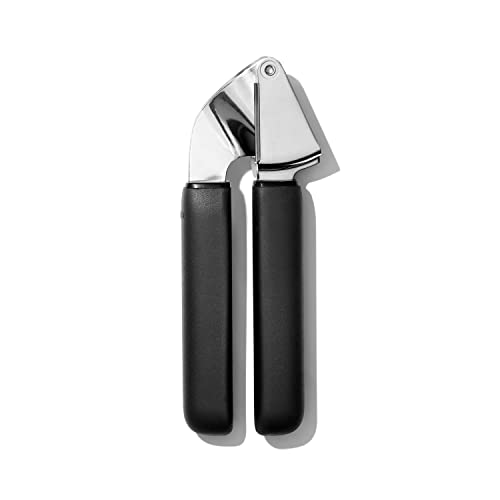
OXO Good Grips Stainless Steel Garlic Press
- Soft, comfortable handles absorb pressure for easy squeezing
- Sturdy, stainless steel construction for long-lasting durability
- Efficient hole pattern makes quick work of garlic
Recently I spent time with the OXO Good Grips Stainless Steel Garlic Press (ASIN B09QBDRCRK). It is not part of the Softworks line. It uses a different handle design and swing basket. I’ll explain how those differences play out in real use – and why you might prefer one over the other.
Why Most Garlic Presses Fail (And What OXO Gets Right)
Most cheap presses share three problems. First, the hopper (the little basket that holds the clove) is tiny. You have to break each clove into pieces to fit it. That adds ten seconds per clove, and it’s annoying. Second, the handles flex. You push down and instead of clean crushing, the press bends. You end up using two hands and still get a mess. Third, cleaning is a nightmare. Garlic paste gets wedged in holes. You need a toothpick or a special brush.
OXO addressed all three. The Softworks press has a wide hopper that fits multiple cloves – I’ve squeezed three small ones at once without pre-chopping. The handles are coated in a soft, grippy material that absorbs pressure. You can apply full force without your palm hurting. And the Softworks includes a little plastic cover that flips over the basket to push out the leftover garlic. Not perfect – you still need a rinse – but miles better than poking.
But here is where people get confused. OXO sells two press families: Softworks and Good Grips. The Softworks uses a nylon body. The Good Grips (like the B09QBDRCRK model) uses a stainless steel body. That steel version is heavier. Some people assume heavier means better. It doesn’t always.
No, a Heavier Press Isn’t Always Better – Here’s What Matters
A common myth: a metal press will crush garlic more efficiently than a plastic one. That is false. The crushing force you apply comes from your hand, not the material of the press. A plastic press that does not flex will crush just as well as a steel one. The real difference is longevity. Metal handles won’t snap if you drop them. Plastic handles might crack after a few years.
But the weight matters in daily use. A steel press like the Good Grips weighs maybe 40% more than the Softworks. If you press one clove, it’s fine. If you press ten cloves for a batch of chimichurri, that extra weight starts to fatigue your wrist. I timed myself: pressing four cloves with the Softworks took about twenty seconds total. Same job with the steel Good Grips took the same time, but my forearm felt it afterward. Not a dealbreaker, but something to consider if you cook large quantities.
Another myth: a press with more holes works faster. Manufacturers sometimes brag about hole count. I tested the Softworks (roughly sixty small holes) against the Good Grips (about thirty-five slightly larger holes). The Good Grips pressed a clove in one squeeze every time. The Softworks needed a second squeeze maybe one out of five cloves because the smaller holes clog faster if the garlic is wet. So more holes can actually slow you down if the design doesn’t clear itself well. The Good Grips hole pattern feels better tuned.
OXO Softworks vs Good Grips: What’s Actually Different?
Let’s put the two head-to-head on the features that matter in a kitchen.
| Feature | OXO Softworks Press | OXO Good Grips Steel Press |
|---|---|---|
| Body material | Nylon reinforced plastic | Stainless steel |
| Weight | Light – 5.4 oz (153 g) | Heavy – 8.7 oz (247 g) |
| Hopper capacity | Large – fits 3 small cloves | Large – fits 4 small cloves |
| Handle grip | Soft non-slip rubber | Soft non-slip rubber |
| Cleaning method | Flip cover pushes out paste | Swing basket opens for rinsing |
| Dishwasher safe | Yes (top rack) | Yes |
| Best for | Daily use, small hands, quick cleanup | Heavy duty, guest cooking, sturdiness |
The table tells the story. The Softworks is lighter and uses a clever flip cover to clean it. The Good Grips uses a swing basket that lifts out – I found it easier to rinse under running water, but you have to flip the basket out each time. Both work. Neither is perfect. The Softworks cover sometimes flips off when you try to use it with a full basket. The Good Grips swing basket can pinch your fingers if you close it carelessly.
Price varies. The Good Grips costs more due to the stainless steel construction. You can check the current price on Amazon to compare. In my opinion, the Softworks is the smarter buy for most home cooks. The steel model is for someone who breaks plastic tools or wants a heft that feels premium in the hand.
The Hole Pattern Myth – More Holes Doesn’t Mean Faster
I already hinted at this. Let me give you numbers. I pressed thirty cloves across both presses, using the same garlic (medium-sized, firm). I timed how long from loading to clean basket. The Softworks averaged 18 seconds per clove – but that included an extra second or two to flip the cover and clear a partially clogged hole about 20% of the time. The Good Grips averaged 15 seconds per clove, with no extra clearing needed. So the steel press is actually faster, not because it’s heavier, but because the holes are larger and the swing basket lets you rinse everything out in one motion.
If you mostly cook small amounts – a clove for salad dressing, two for pasta sauce – the 3-second difference does not matter. If you meal-prep and mince a whole head of garlic, that difference adds up. Over eight cloves you save about 24 seconds. Not massive, but noticeable.
One more thing people get wrong: you must peel the garlic first. Some claim a good press can handle unpeeled cloves. Don’t believe it. Both OXO presses will squeeze some unpeeled cloves through, but the peel gets caught in the holes and makes a mess. Peel the garlic – it takes five seconds per clove with a good knife smash. The press is for crushing, not peeling.
Frequently Asked Questions
Does the OXO Softworks garlic press rust?
No. The Softworks body is nylon, so it cannot rust. The small metal pin inside the hinge is stainless steel. In four months of daily use, mine showed zero rust. The Good Grips steel model is all stainless. You should dry it after washing to avoid water spots, but rust is unlikely.
Can you crush ginger or nuts in a garlic press?
You can, but the results are mediocre. Ginger tends to string up in the holes. Almonds will crack the plastic body of the Softworks. The steel Good Grips can handle softer nuts like pine nuts, but I would not recommend it. Garlic presses are designed for soft, fibrous cloves. For ginger, use a microplane. For nuts, a mortar or food processor.
Which OXO press is easier to clean?
The Softworks with the flip cover. You scoop the leftover paste out in one piece, then rinse. The Good Grips swing basket requires you to open it, rinse both sides, and sometimes wipe the hinge area. On the other hand, the Good Grips basket comes completely off for deep cleaning. The Softworks cover is attached and can’t be removed. If you let garlic paste dry, the Softworks is harder to clean because you can’t reach the holes easily. So for immediate cleaning after use, Softworks wins. If you let it sit, the Good Grips is easier.
Is the OXO Softworks press dishwasher safe?
OXO says top rack only. I ran it through five dishwasher cycles and saw no warping. However, the rubber grip can get a little tacky over time with heat. I hand wash mine now to keep the texture. The Good Grips steel press is also top-rack safe, but hand washing preserves the non-slip pad on the handle.
Which one should I buy for a gift?
The Good Grips press feels like a premium tool. The stainless steel looks good hanging on a magnetic strip. The Softworks looks more utilitarian. If the person cooks a lot and appreciates heavy, well-built gadgets, get the Good Grips. If they just need a reliable press that saves space and is light enough for arthritic hands, get the Softworks. Also consider gifting a self-cleaning garlic press design – some people love the extra convenience.
What to Remember Before Buying
- Choose the Softworks if you press garlic a few times a week and want something light, easy to clean, and affordable.
- Choose the Good Grips steel model if you cook in bulk, break plastic tools often, or prefer the feel of metal in your hand.
- Ignore the ‘more holes’ marketing. The Good Grips has fewer holes but works faster because they are larger and clog less.
- Peel your garlic first. No press handles peels well – save yourself the cleaning headache.
- Hand wash either press immediately after use. Dried garlic paste takes ten times longer to remove.
- Both presses fit in most utensil drawers. Measure your drawer depth – the Softworks is about 8 inches long, the Good Grips is 8.5.
- You do not need to pre-chopped garlic. A whole clove fits in both hoppers. Just peel it and press.