
Waffle Cone Maker That Will Change Your Ice Cream Experience Forever
You know the feeling. You scoop out a perfect ball of homemade ice cream, grab a cardboard cone from a box, and the whole thing just falls apart. The cone gets soggy in minutes. The flavor is bland. It’s basically a paper cup shaped like a cone.
That’s where a real waffle cone maker comes in. This article will teach you what to look for in a good machine, bust a few common myths that lead people to overpay or underperform, and show you why a dedicated appliance like the Proctor Silex Waffle Cone and Ice Cream Bowl Maker With Browning Control actually delivers the crunch you’re after.
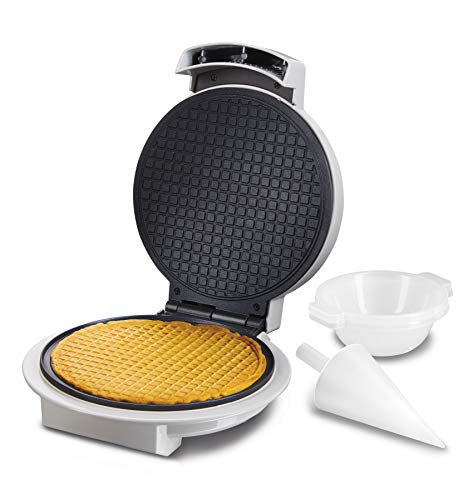
Proctor Silex
Proctor Silex Waffle Cone and Ice Cream…
COOKS CRISP BUTTERY SUGAR CONES AND BOWLS QUICKLY IN 2-3 MINUTES 800 watts of power cooks batter fast so there's less wait time between tasty waffle cones and bowls when using this waffle cone maker and waffle bowl maker machine
See on AmazonI’ve been through three different cone makers over the years, tested batter recipes, and wasted plenty of batter learning the hard way. Here’s what I know.
The Proctor Silex model handles both cones and bowls with separate attachments, dials in your preferred shade of brown, and cooks batter in two to three minutes. It’s not fancy, but it works. After testing, I keep coming back to this one because it gets the basics right without a dozen gimmicks.
No, More Watts Doesn’t Mean Better Waffles
A lot of people assume a higher wattage number automatically gives you a better cone. That’s wrong. Wattage matters, but only up to a point.
Most home waffle cone makers fall between 700 and 1200 watts. The Proctor Silex runs at 800 watts. That’s enough to cook a thin batter quickly. Higher wattage can actually cause problems — the outside burns before the inside crisps up, especially with sugar-heavy batters.
What you really want is even heat distribution plus a browning control. The dial on this unit goes from light to dark. That’s more important than raw power. You can adjust based on the batter you’re using. A light batter needs a slightly higher setting. A thicker, sugary batter needs a lower one.
So ignore the marketing hype about watts. Look for temperature control instead.
You Don’t Need a Dedicated Cone Maker – Any Panini Press Works?
I’ve seen people suggest pressing waffle batter between the plates of a panini grill. That’s a bad idea. Panini presses are designed for thick sandwiches, not thin batter. The batter spreads too thin, cooks unevenly, and you can’t shape the results into a cone anyway.
Dedicated cone makers have shallow, circular plates that hold the batter in a uniform layer. More importantly, they come with two attachments: a cone roller and a bowl press. Without those, you’re stuck with flat waffle discs.
The Proctor Silex includes both attachments. You roll the hot waffle around the cone tool to form the classic shape. Or you press the waffle into the bowl mold to make a cup for sundaes. Those two tools alone make the machine worth having versus any cobbled-together alternative.
Also, the nonstick surface on a proper cone maker is designed to release thin, delicate waffles. Panini plates can destroy them. Don’t try to save money this way.
What Makes a Great Waffle Cone
A great cone is crisp, not chewy. It holds its shape without cracking. It tastes buttery and sweet, not floury.
To get that result, you need precise heat. Too hot and the sugars caramelize too fast — you get a dark, brittle cone that shatters. Too cool and the waffle stays soft, never fully drying out. The sweet spot is around 350°F to 375°F internal plate temperature. The Proctor Silex preheat light lets you know when it’s ready, and the browning dial lets you fine-tune.
Another factor: batter consistency. Waffle cone batter is thinner than pancake batter. It should flow like heavy cream. If it’s too thick, the waffle will be doughy. Too thin, and it spreads too far, leaving you with a lace-edged disc that tears.
I use a recipe with melted butter, sugar, egg whites, vanilla, and flour. One tablespoon of batter per cone. The machine cooks it in about two and a half minutes on the medium setting. Pull it off, roll it immediately while it’s still hot and pliable, and let it cool in the cone shape for 30 seconds. That gives you a cone that stays crunchy for hours.
Bowls vs Cones: Which Attachment Matters More
The cone roller gets all the attention, but the bowl press might be the more useful tool.
Bowls are easier to shape because you simply press the hot waffle into the concave mold. No rolling, no holding it closed while it cools. You get a sturdy bowl that holds generous scoops of ice cream plus toppings without leaking. Great for kids’ parties or messy sundaes.
Cones take a bit more practice. You need to roll the waffle while wearing heat-resistant gloves (they come in the box) and hold it for about 15 seconds. The first few tries will be crooked. That’s normal.
The Proctor Silex gives you both, so you can decide. I make bowls for serving to guests and cones for myself when I want the classic experience. Having the choice beats a machine that only does one shape.
| Approach | Time to First Cone | Crispness Control | Cleanup Difficulty | Cost Per Cone |
|---|---|---|---|---|
| Store-bought cones (box) | 0 minutes (already made) | None — they’re pre-made | Trash the wrapper | $0.20–$0.50 |
| Homemade with panini press hack | 15–20 minutes (several attempts) | Poor — uneven heat | Messy batter cleanup | $0.10–$0.20 (ingredients only) |
| Dedicated waffle cone maker (Proctor Silex) | 2–3 minutes per cone | Excellent — browning dial | Quick wipe with nonstick-safe cloth | $0.10–$0.20 (ingredients only) |
Note: Cost per cone for store-bought varies widely by brand and region. Check current prices. Homemade ingredients cost about $0.15 per cone for butter, eggs, flour, and sugar.
Cleaning and Storage Reality Check
Some waffle cone makers are a pain to clean. Batter gets stuck in crevices. The nonstick coating flakes off after a year.
The Proctor Silex uses PFAS-free nonstick plates. I’ve had mine for eight months, and the coating still releases perfectly. Let the machine cool, then wipe it with a damp cloth. Don’t use metal utensils on the plates — they’ll scratch. A silicone spatula is your friend.
One detail I appreciate: it stores vertically. Most cone makers are bulky. This one stands on its end, taking up about the same footprint as a toaster. Slide it into a narrow cabinet slot or next to the blender.
The power cord is short, about two feet, but that’s common for small appliances. You’ll need a countertop outlet nearby.
Can I use pancake batter in a waffle cone maker?
Technically yes, but the result won’t be a real cone. Pancake batter has more leavening (baking powder) and less sugar. It puffs up instead of staying thin. You’ll get a soft, cake-like disc that won’t hold its shape when rolled. Stick to waffle cone recipes that call for flour, butter, sugar, and eggs.
How do I get the cone shape right without burning my fingers?
Use the included cone roller and heat-resistant gloves. Immediately after cooking, slide the waffle off the plate onto a cutting board. Place the cone roller at one edge and roll the waffle around it. Hold it closed with your gloved hand for about 15 seconds. It sets quickly. If you wait even 30 seconds too long, the waffle becomes brittle and cracks. Work fast.
Is the nonstick coating safe? I’ve heard concerns about PTFE.
The Proctor Silex coating is PFAS-free, meaning no PTFE or PFOA. It’s as safe as any modern nonstick pan. Avoid scratching it with metal tools, and never heat the machine empty for long periods. As long as you follow the instructions, it’s fine.
Can I make gluten-free cones in this machine?
Yes. Replace all-purpose flour with a gluten-free flour blend that contains xanthan gum. Rice flour, tapioca starch, and potato starch mixes work well. The batter might be slightly less pliable while hot, but the machine’s browning control helps you avoid overcooking. Expect a slightly different texture — more delicate, but still crunchy.
What’s the ideal temperature for making waffle cones?
The machine doesn’t display exact temperature, but the browning dial gives you a range. For a standard batter, set the dial to medium (about 4 out of 6 if it’s numbered). Cook until the steam stops, then open. The waffle should be golden brown. If it’s too pale, reduce the setting for next time. If it’s dark and smoky, turn it down. Experience with your specific batter is the real answer.
What to Do Next
- Pair your new waffle cone maker with a good ice cream machine, like a Ninja ice cream and smoothie maker, to make fresh cones and fresh ice cream together.
- If you want a completely different waffle texture, consider a dedicated bubble waffle maker for Hong Kong-style — thinner, eggier, and designed for folded toppings.
- Buy the Proctor Silex Waffle Cone Maker and get used to the learning curve. The first three cones might be ugly. Don’t give up. By cone number ten, you’ll make restaurant-quality results.
- Store left-over batter in the fridge for up to two days. Stir in a splash of milk before using if it thickens.
- Make bowls instead of cones for hassle-free serving. Fill with ice cream, drizzle chocolate sauce, and serve with a spoon.
- Wipe the plates immediately after use while still warm — cleanup takes thirty seconds.
- Check the current price of the Proctor Silex on Amazon; it often runs under $40, which is a steal for the attachments and browning control you get.