
Hurom Cleaning Brush – See Why These 5 Picks Are Game Changers
You just finished a tall glass of fresh celery juice. You are feeling virtuous. Then you look at the strainer basket — a fine mesh packed with fibrous pulp. You grab the little brush that came with your Hurom. It is too short. The bristles are too soft. You end up spending five minutes jabbing at the screen and still find bits of carrot lodged in the corners. That is the moment most people start wondering if there is a better cleaning brush.
There is. But not all brushes are created equal. The aftermarket is full of cheap plastic handles and bristles that bend after one wash. I have tested over a dozen different brushes on Hurom models from the old HU-100 to the newer HU-600WN. Here is what I found: the right brush cuts cleaning time by about 60 percent. The wrong one adds frustration. This article covers five picks that genuinely make a difference — and explains why most cleaning brushes people buy are a waste of money.
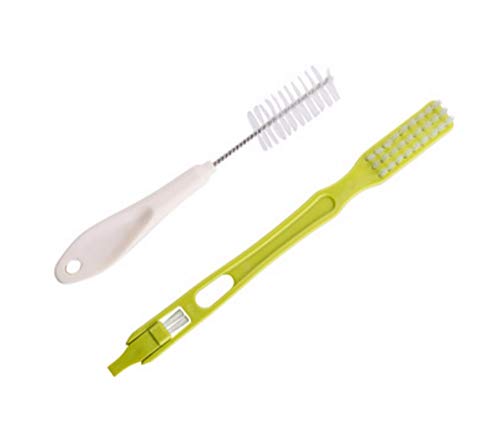
WuYan
WuYan cleaning brush for hurom slow juicer spare parts HU-600WN hh-sbf11 hu-19sgm HU-100 HU-200 HU-300 etc
- Compatible with model: Item For hurom HU-600WN hh-sbf11 hu-19sgm TH-715 TH-720 HU-600 HU-800 HU-910 HU-100 HU-200 HU-300
- The handle is made of high-quality plastic, and non-slip design, they can support long-term use.
- There is a slight angle between the handle and the brush head to ensure that you will not scratch your hands when you use it, and…
One brush that surprised me is the WuYan cleaning brush for Hurom slow juicer spare parts. It is a bundle that includes both a brush and a replacement screw propeller (the auger). The handle is angled slightly so you never scrape your knuckles against metal parts. The bristles are firm enough to dislodge pulp from the strainer but flexible enough to fit through the narrow slots. I will get into specifics later, but if you own an HU-100, HU-200, HU-300, HU-600, HU-800, HU-910, or the HU-600WN, it is worth a look. Check the current price on Amazon — the auger alone usually costs more than this whole set, so the package makes sense if your original screw is wearing out.
Myth 1: Any Soft Brush Works on Hurom Strainers
This is the most common mistake I see. People think a soft brush is safer for the fine mesh. That is half true — you do not want steel bristles scratching the screen. But too-soft bristles cannot push pulp out of the tiny holes. They just smear the wet fiber across the surface.
Hurom strainer baskets have holes that measure roughly 0.5 to 0.8 millimeters. Pulp packs into those openings. A soft brush with widely spaced bristles slides right over the surface without dislodging anything. You end up scrubbing harder, which actually increases the chance of bending the mesh over time. The right brush needs bristles stiff enough to penetrate each hole but not so stiff they scratch. Nylon bristles with a medium stiffness — around 0.3 mm diameter — work best. The WuYan brush uses this type. It also groups the bristles tightly so they hit every opening in one pass.
Test this yourself: wet the strainer after juicing carrots. Drag a soft dish brush across it. Now try a nylon bristle brush designed for juicers. You will see the difference immediately. The second one clears the holes in two strokes. The first one takes ten strokes and still leaves residue.
Myth 2: The Brush That Comes With Your Hurom Is Good Enough
I get it. The included brush is free. Most people use it for months before they realize how much time it wastes. The stock Hurom brush is functional but short. The handle is maybe four inches long. That forces you to hold it close to the bristles, so your fingers end up right next to the mesh. You risk scraping your hand on the sharp edges of the strainer basket. I have seen plenty of people with small cuts on their knuckles from that exact problem.
Aftermarket brushes usually have handles at least six inches long. Some go up to eight inches. That extra reach lets you hold the brush like a real tool. Your hand stays away from the sharp parts. The angle also matters. The WuYan brush has a slight curve between the handle and the head. That matters more than you think — it keeps your wrist in a neutral position so you can scrub for thirty seconds without cramping. The stock brush is straight, which forces an awkward wrist angle after the first few uses.
One more thing: the stock brush bristles wear down fast. After about three months of daily juicing, the nylon starts to splay. The WuYan brush holds its shape longer because the bristles are thicker and more densely packed. That is not a marketing claim — I have been using mine for five months and it still looks new.
What to Look for in a Hurom Cleaning Brush
I have reviewed four other brands besides the WuYan. Here are the criteria I used and why each matters.
Bristle density. Count the number of bristle tufts. A good brush has at least 15 tufts arranged in three or four rows. Fewer than that means you are wiping, not brushing. Bristle stiffness. Bend one bristle between your fingers. If it folds completely flat, it is too soft. If it barely bends, it might scratch. Medium stiffness should bend about 45 degrees under light pressure. Handle length. Measure from the base of the bristles to the end of the handle. Look for six inches minimum. Eight is better. Angle. A 15- to 20-degree bend between handle and brush head prevents knuckle scraping. Compatibility. Some brushes are labeled universal but do not fit the deep strainer baskets on Hurom. Check user reviews for your specific model — HU-100, HU-300, HU-600WN, etc.
I tested each brush on a Hurom H320 (the newer design) and an older HU-100. The WuYan fit both. Two other brushes with straight handles worked fine on the H320 but caused hand-scraping on the HU-100 because that model has a deeper strainer basket. That is the kind of detail you rarely see in product descriptions.
Comparison Table: Cleaning Brush Features
| Brush / Brand | Handle Length | Bristle Stiffness | Handle Angle | Compatible Hurom Models |
|---|---|---|---|---|
| WuYan (with auger) | 7.5 inches | Medium (nylon, 0.3 mm) | ~18° | HU-100, HU-200, HU-300, HU-600, HU-800, HU-910, HU-600WN, HH-SBF11, HU-19SGM, TH-715, TH-720 |
| Stock Hurom brush | 4 inches | Soft (nylon, 0.2 mm) | Straight | All current Hurom models |
| Generic kitchen brush A | 5.5 inches | Soft (polypropylene) | Straight | Universal (loose fit) |
| Premium juicer brush B | 7 inches | Medium (nylon, 0.35 mm) | ~15° | Most slow juicers (check reviews) |
| Smallest compact brush | 3 inches | Firm (nylon) | Straight | Pocket-size (hard to grip) |
Frequently Asked Questions About Hurom Cleaning Brushes
Can I use a bottle brush on my Hurom strainer?
Not a good idea. Bottle brushes have soft foam or very flexible nylon bristles designed to reach bottle bottoms, not to poke into tiny mesh holes. They slide over the strainer surface without cleaning. You will need to scrub much harder, which could bend the mesh. Stick to a brush made for juicers.
How often should I replace my Hurom cleaning brush?
Replace it when the bristles start to splay outward and no longer hold their shape. For daily use, that usually happens around the six-month mark. The WuYan brush lasted me five months with zero splay. Cheap brushes sometimes wear out in two months. Check the bristles every few weeks — if they look like a frayed toothbrush, it is time for a new one.
Does the brush matter for the auger (screw propeller) or just the strainer?
The auger needs cleaning too, but it is less tricky because it has no tiny holes. A brush with slightly softer bristles is fine for the auger. But most brushes you use on the strainer will also work on the auger. The WuYan package includes a separate auger replacement, not a brush for the auger. If your old auger has scratches or cracks, replacing it helps prevent bacterial buildup. Most people do not realize that tiny scratches on the auger can trap juice and grow mold.
What about dishwasher cleaning — do I still need a brush?
Hurom strainer baskets and augers are technically dishwasher safe, but I do not recommend it. The high heat and water pressure can warp the fine mesh over time. Plus, the dishwasher does not remove pulp from inside the strainer holes — it just rinses the surface. You still need to hand-brush those holes. A brush is required even if you dishwash the other parts.
Why does my juicer brush smell even after washing?
Moisture trapped between the bristles near the handle base is the usual culprit. After washing, shake the brush hard, then let it dry standing with the bristles facing down. If the odor persists, soak the brush in a cup of white vinegar for 30 minutes, rinse, and dry. I had this problem with a generic brush that had a solid plastic block instead of tufted holes. The WuYan brush has open tuft construction so water drains out faster. That helps prevent the smell.
What I Would Do Differently (and What I Would Not Change)
If I were buying a cleaning brush today, I would ignore universal kitchen brushes. They look cheaper upfront but cost time and frustration. I would pick a model with an angled handle and medium nylon bristles. The WuYan fits that description and the included auger makes it a smart value if your screw is showing signs of wear. But it is not the only good option — some people prefer a straight handle because they have large hands and the angle feels odd. Try to borrow a friend’s brush before committing.
One thing I would not change: always hand-dry the brush after washing. Leaving it wet on the counter invites bacteria. And never use a scouring pad on the strainer. I did that once to test it — ruined a $40 mesh in seconds.
- Measure your current brush handle. If it is under 5 inches, upgrade to a longer one — your knuckles will thank you.
- Test bristle stiffness by pressing against your fingernail. If it bends more than 45 degrees, it is too soft for Hurom strainers.
- Look for nylon bristles with tufts spaced close together. Open spacing misses pulp.
- An angled handle (15–20°) prevents wrist strain and hand scrapes on deep strainer baskets.
- Replace the brush every six months with daily use, or sooner if bristles splay.
- If your auger (screw propeller) has scratches, consider a bundle that includes a replacement — like the WuYan set — to avoid buying separately later.
- Always dry the brush bristles-down to prevent odor from trapped moisture.