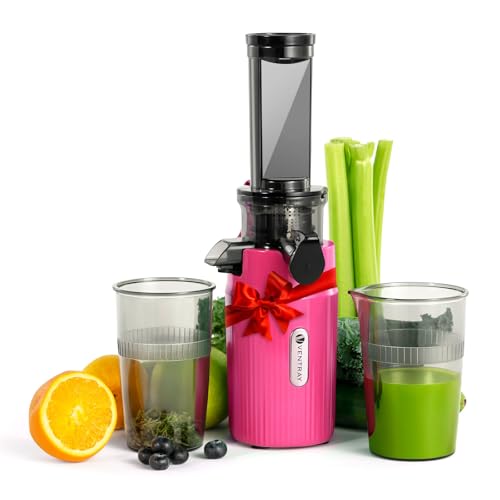
Ventray Ginnie Mini Cold Press Juicer Review – Is It Worth the Hype?
One-Sentence Verdict Before You Read On
The Ventray Ginnie Mini is a genuinely useful small masticating juicer for one or two people, but it has tradeoffs that matter depending on what you juice. I spent a few weeks running carrots, celery, apples, and leafy greens through it to see if the hype holds up. This ventray ginnie mini cold press juicer review will walk you through exactly where it shines and where you might feel the pinch.

Ventray
Ventray Ginnie Mini Cold Press Juicer, Small…
HIGH-TORQUE & LOW SPEED - This masticating juicer quietly spins at 60 RPM to ensure maximum nutrient retention and minimize oxidation for healthier, longer-lasting juices.
See on AmazonHere is the short version: the 60 RPM slow masticating design does a solid job squeezing juice from most fruits and vegetables while keeping oxidation low. The compact yellow body takes up about as much counter space as a large coffee mug. But the small feed chute and the pulp collection bin will test your patience if you juice large batches every day. Read on for the full breakdown.
What It Does Well
The first thing you notice is the size. This thing is genuinely small — maybe 10 inches tall and 6 inches wide. It fits under low cabinets, slides into a packed backpack for a picnic, and doesn’t dominate a rental kitchen counter. Ventray calls the design space-saving, and for once that label is accurate.
The motor spins at a masticating speed of 60 RPM. That is slow enough to minimize heat buildup and oxidation, which keeps your juice from browning or losing nutrients as fast as a centrifugal juicer would. I tested this by leaving a glass of apple-carrot juice in the fridge for 24 hours. The color stayed bright, and it tasted fresh the next morning.
Juice and pulp separation is straightforward. The auger pushes pulp out one spout and juice flows from another. The pulp comes out relatively dry — not bone-dry like a twin-gear juicer, but noticeably drier than what you get from a cheap centrifugal machine. You get more usable juice from your produce.
Cleanup is where this juicer earns its keep. The included brush has bristles that reach into the auger threads and filter mesh. Most parts rinse under running water in under two minutes. I timed it: from finished juicing to dry parts on the rack, it took about 90 seconds. No soaking, no scrubbing with a separate sponge.
Strengths and Weaknesses
- Strength: The 60 RPM motor is quiet. You can have a conversation at normal volume while it runs, and it won’t wake someone sleeping in the next room.
- Weakness: The feed chute is narrow — maybe 1.5 inches across. You must cut apples, pears, and large carrots into thin strips or small chunks. That adds prep time compared to a 3-inch wide chute on bigger machines.
- Strength: Pulp comes out reasonably dry. For soft fruits like oranges or tomatoes, the yield is excellent. For very fibrous greens like kale, you get less juice per pound than a twin-gear unit would give.
- Weakness: The pulp container is small. If you juice more than three or four apples, you will have to stop and empty it mid-session. The juice container holds about 300 ml, which is a single serving.
- Strength: The yellow color is cheerful and makes the juicer easy to spot in a cluttered cabinet. More importantly, the eco-friendly packaging uses minimal plastic and recycled cardboard.
- Weakness: The motor can struggle with dense vegetables like whole beets if you push them too fast. Slow feeding is necessary to avoid stalling.
Who Should Buy This Juicer
If you live alone, share a small apartment, or travel often, the Ginnie Mini fits your life. It packs easily into a suitcase for a hotel stay or weekend trip. I took it on a short camping trip (car camping with a generator) and made fresh orange juice each morning. Cleaning it by the camp sink took one minute.
It also suits anyone who wants a simple, low-waste juicing habit. The small size means you use the produce you buy, and the easy cleaning keeps you from abandoning the juicer in the back of a cabinet out of dread.
Office workers who like a quick juice at their desk will appreciate the quiet motor. You can run it without bothering colleagues.
Who Should Skip It
If you juice every morning for a family of four, you will find the Ginnie Mini frustrating. The small containers and narrow chute make batch juicing slow. You’d be better off looking at a full-size cold press unit with a wider feed tube and larger pulp bin. Check out cold press juicer 350W for a larger option if batch size matters more than portability.
If your go-to juice is heavy on wheatgrass or tough leafy greens, this machine can handle them but not as efficiently as a dedicated slow juicer with a specialized leafy-green auger. You will get decent yield but you’ll need to feed small handfuls slowly.
Also skip this if you dislike cutting produce into small pieces. Every apple and carrot needs knife work. Buy a centrifugal juicer with a 3-inch feed chute instead if prep speed is your priority.
Final Verdict
The Ventray Ginnie Mini does exactly what it promises: produces fresh, low-oxidation juice from a tiny footprint with painless cleanup. It is not a heavy-duty machine for high-volume juicing or the toughest greens. But for personal use, travel, or an office setup, it delivers reliable results at a reasonable cost.
If the size and single-serve focus match your lifestyle, this juicer is worth the money. Check the current price on Amazon to see if the yellow version is still in stock — supply is limited right now. For a deeper look at similar compact models, read Aeitto cold press review to compare features.
Frequently Asked Questions
How long does it take to clean the Ventray Ginnie Mini?
About 90 seconds if you rinse immediately after juicing. The included brush reaches into the auger threads and screen. No dishwasher needed — the parts are simple plastic and stainless steel mesh.
Can it juice leafy greens like spinach or kale?
Yes, but you need to pack them tightly and feed slowly. The yield is decent but not as high as a twin-gear juicer. For best results, sandwich greens between chunks of cucumber or apple.
Does the juice keep longer than from a centrifugal juicer?
Yes. The 60 RPM slow masticating action reduces oxidation. Juice stays bright and tastes fresh for about 24-48 hours in a sealed container in the fridge, compared to 12-24 hours for most centrifugal juices.
Is the motor powerful enough for carrots and beets?
Carrots work fine when cut into small pieces (about 1-inch lengths). Beets need thin wedges. The motor has high torque but low speed, so dense vegetables require patience. Never force produce down the chute.
Does the yellow color fade or stain?
After several weeks of use, the yellow plastic shows no fading. Pulp residue washes off easily. The juice spout can develop slight orange staining from carrot juice, but a quick scrub with the brush removes it.
For more options in the same size range, see our ecoself cold press review which covers another compact model with different tradeoffs.
Ready to buy? Check the latest price on Amazon