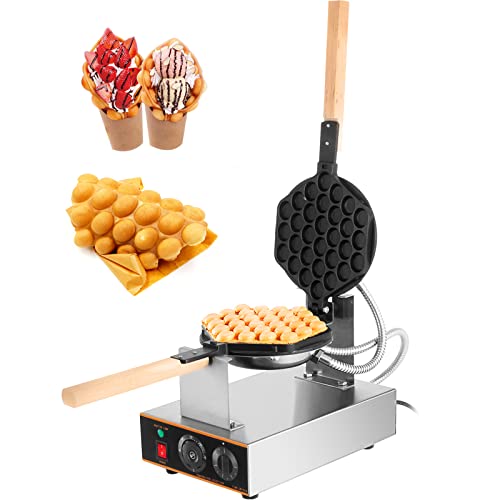
5 Surprising Bubble Waffle Cone Makers You Didn’t Know You Needed
You bought a bubble waffle iron thinking you’d whip up Hong Kong-style egg waffles every weekend. A month later, it’s buried in the cabinet. The batter stuck, the waffle came out pale, and cleaning took forever. You’re not alone. Most people pick the wrong machine or don’t realize what it can really do.
This article covers the five types of bubble waffle cone makers that most people overlook. You’ll find out why more watts don’t guarantee better results, why a stovetop unit might outperform an electric one, and why a machine that also makes cones and bowls can save counter space and money. The goal is to help you buy smarter and actually use the thing.
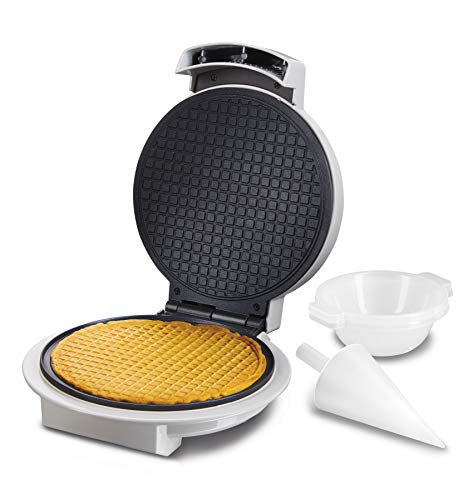
Proctor Silex
Proctor Silex Waffle Cone and Ice Cream…
COOKS CRISP BUTTERY SUGAR CONES AND BOWLS QUICKLY IN 2-3 MINUTES 800 watts of power cooks batter fast so there's less wait time between tasty waffle cones and bowls when using this waffle cone maker and waffle bowl maker machine
See on AmazonLet’s start with a model that belongs in every kitchen because it does more than you expect.
The Proctor Silex Waffle Cone and Ice Cream Bowl Maker (ASIN B08464TZV5) comes with both a cone roller and a bowl press. That means one appliance makes sugar cones, waffle bowls, and even flat waffles. It’s not a dedicated bubble waffle maker, but its 800-watt element and adjustable browning control give you the same crisp, golden texture you aim for with traditional waffle cones. For someone who wants versatility without buying three separate gadgets, this machine is worth a look.
No, More Watts Doesn’t Always Mean Better Bubble Waffles
You see a 1200-watt bubble waffle maker and assume it cooks faster and crunchier. That’s not automatically true. Wattage determines how fast the plates recover heat after you pour in batter. But if the plates are thin aluminum, the heat dissipates unevenly no matter how many watts you throw at it. A 700-watt machine with thick cast-aluminum plates will produce more consistent browning than a 1000-watt unit with thin stamped steel.
What matters is temperature control. Some cheap machines have a simple on/off thermostat that swings 30 degrees either way. The result: burnt patches and raw dough in the same waffle. The Proctor Silex lets you dial a browning setting from light to dark, and a preheat light tells you when it’s ready. For bubble waffle batter, which has more liquid than regular waffle batter, even heat across the entire plate is critical. Look for machines with a browning dial, not just a single heat setting.
You Don’t Need a Separate Machine for Cones and Bowls
A common belief: you need one iron for bubble waffles, another for sugar cones, and a third for bowls. That’s a lot of plastic and metal sitting in your drawer. Many electric waffle cone makers come with interchangeable attachments. The Proctor Silex, for instance, includes a cone roller and a bowl press right in the box. You cook a flat waffle, then shape it within seconds while it’s still hot.
The trade-off is that these machines don’t make the bubble pattern. They produce classic thin, crisp waffles that bend into cones or bowls. If bubble waffles are your only goal, stick with a dedicated bubble iron. But if you host parties where people want different serving styles, a dual-purpose cone maker saves money and storage. The bowl press is especially handy for holding ice cream, fruit, or even chili.
The Best Bubble Waffle Maker Might Be Stovetop
Electric bubble waffle makers are convenient, but they have limits. Most are 6–8 inches in diameter and produce only one small waffle at a time. A stovetop cast-iron bubble waffle maker fits over a gas burner and can reach higher temperatures than any electric plate. The direct flame gives you a faster crust and a chewier interior. That’s the texture traditional egg waffle vendors in Hong Kong aim for.
Stovetop versions also last longer. No heating element to burn out, no nonstick coating to peel. You season it like a cast-iron skillet. The downside: you need a gas stove and a steady hand to flip it. Induction stoves won’t work unless the iron has a magnetic base. And you have to manage the flame yourself. But if you want authentic street-style bubble waffles with that distinctive char, skip the electric countertop model and get a round, heavy cast-iron stovetop unit.
Size Matters Less Than You Think
People assume you need a big machine to make full-size bubble waffles. Most consumer electric models cook waffles about 5–6 inches across. That’s actually plenty. A standard egg waffle is folded into a tube shape, so the diameter matters less than the depth of the bubbles. Deeper wells create the iconic puffy spheres. Some compact machines have shallow indentations that yield flat, cracker-like results. Check the depth of the molds before buying. A 5-inch iron with 1.5 cm deep bubbles outperforms a 7-inch iron with 0.5 cm deep dimples.
Mini machines also preheat faster. A 600-watt mini iron can be ready in 90 seconds, compared to 3–4 minutes for larger units. If you’re cooking for two, a small machine means less counter clutter and quicker cleanup. The Proctor Silex stores vertically to save space, which is a clever solution for small kitchens. For bubble waffle specific mini makers, look for models that come with a silicone spatula set to get into the deep wells without tearing the waffle.
Comparison: 5 Types of Bubble Waffle Cone Makers
| Type | Best For | Key Feature | Trade-Off |
|---|---|---|---|
| Dual-Purpose Electric (e.g., Proctor Silex) | Cones, bowls, flat waffles | Includes cone roller and bowl press; adjustable browning | Does not make bubble waffles |
| Stovetop Cast-Iron | Authentic Hong Kong-style bubble waffles | High heat, deep wells, long lifespan | Requires gas stove; manual flipping |
| Mini Electric Bubble Iron | Single servings, quick cooking | 5-inch plates, fast preheat, compact | Small capacity; not for parties |
| Large Commercial Electric | High-volume production | 3+ waffles at once, heavy-duty build | Expensive, heavy, counter space hog |
| Interchangeable Plate System | Multi-purpose kitchen gadget | Swappable plates for bubble, Belgian, panini | Plates cost extra; seams can leak batter |
Frequently Asked Questions
Can I use regular pancake batter in a bubble waffle maker?
You can, but the texture won’t be right. Bubble waffle batter includes more eggs and a touch of custard powder or cornstarch for that crispy outside and chewy inside. Regular pancake batter has too much milk fat and will steam rather than crisp. If you’re in a pinch, increase the egg-to-flour ratio to at least 1:1.
How do I clean the deep wells without damaging the nonstick coating?
Let the waffle iron cool slightly, then wipe the wells with a damp microfiber cloth. For stuck bits, brush them out with a silicone pastry brush after the plate is warm. Never use metal utensils or abrasive sponges. Some manuals recommend a light wipe of oil after each use to maintain the coating.
Can I make savory bubble waffles with this machine?
Absolutely. Savory bubble waffles work with a batter base of eggs, rice flour, and water. Add scallions, garlic powder, or shredded cheese. The deep bubbles hold sauces and toppings well. Just reduce sugar in the recipe or use none. The machine doesn’t care; it just cooks whatever you pour in.
Is it true that you need a separate cone roller to make bowls?
No. You can shape a hot waffle over an inverted ramekin or a small bowl to make a bowl. The Proctor Silex includes a dedicated bowl press, so you get uniform shapes every time. Without a press, you’ll have to work quickly and use oven mitts. The press is worth having if you make bowls often.
Can I freeze leftover bubble waffles?
Yes. Cool the waffles completely on a wire rack, then stack with parchment paper between them in a freezer bag. They keep for up to three months. Reheat in a toaster or a 350°F oven for 4–5 minutes. Do not microwave; it makes them rubbery. Some people even reheat in the waffle iron itself for 30 seconds per side.
What to Do Next
- Choose your primary need: crispy cones and bowls (dual-purpose electric) or classic bubble waffles (stovetop or dedicated electric).
- Check the depth of the bubble molds. Deeper wells (over 1 cm) give you the puffy texture. Shallow wells produce thin, flat waffles.
- Look for adjustable browning control. A simple on/off thermostat leads to uneven results. A dial lets you dial in the goldenness.
- If you buy a cone maker, confirm it includes both the roller and the bowl press. Buying them separately almost always costs more.
- For more detailed recommendations on specific bubble waffle makers, see our bubble waffle maker guide. It covers top models and what to look for.
- To prep your batter faster, a decent food processor review can help you choose a model that also handles smoothies – one less gadget on the counter.
- Store your waffle iron vertically if possible. Standing upright saves counter space and keeps the nonstick coating from getting scratched by other pots.